







How to choose a suitable industrial robot arm?
What is industrial robot arm?
An industrial robot is a programmable machine designed to autonomously carry out tasks in an industrial setting. It is a type of robot specifically created for manufacturing and production environments. Industrial robots are commonly used in various industries, such as automotive manufacturing, electronics assembly, food processing, and pharmaceutical production.
These robots are typically equipped with multiple axes of movement, allowing them to perform a wide range of tasks with precision and repeatability. They can be stationary or mobile, depending on the application. Industrial robots are often integrated into production lines and work alongside human operators or other robots to perform specific operations.
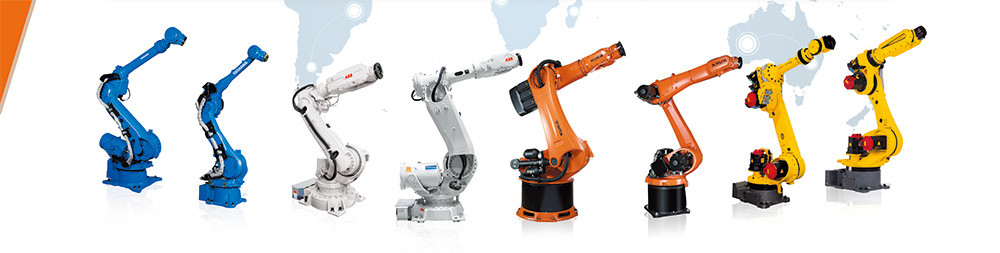
Next I will take you deeper into the past life of the industrial robotic arm to help you better understand and choose the right robotic arm for you.
What are the characteristics of industrial robotic arms?
Check out this video to help you better understand the application of robotic arms.
Programmability: Industrial robots are designed to be programmed and reprogrammed to perform different tasks. They can be taught specific motions and sequences or be programmed using specialized software.
Sensing and Perception: Many industrial robots are equipped with sensors to perceive and interact with their environment. These sensors can include vision systems, force sensors, and tactile feedback devices, allowing robots to detect objects, measure forces, and respond to changes in their surroundings.
Manipulation and Dexterity: Industrial robots are capable of precise and controlled manipulation of objects. They can handle materials of varying sizes, weights, and shapes, and perform tasks such as picking, placing, sorting, assembling, welding, painting, and packaging.
Safety Measures: Safety is a crucial aspect of industrial robotics. Robots are often equipped with safety features such as emergency stop buttons, protective barriers, and motion sensors to ensure the well-being of human operators working in close proximity to them.
Automation Integration: Industrial robots are frequently integrated into automated systems, where they collaborate with other robots or machinery to optimize production processes. They can be connected to computer systems, programmable logic controllers (PLCs), and other equipment to coordinate their actions and exchange information.
What is the role of the industrial robotic arm?
With a huge number of applications, industrial robots have become quite a common sight in several industries today. There are hundreds of tasks that are too dangerous for humans or are repetitive and tedious or require high levels of precision that have now been taken over by industrial robots. Automated and programmable, these robots are capable of moving on three or more axes and accomplish their programmed tasks with endurance, speed, and precision, every time. While the automobile industry was the first to integrate robots into their assembly line processes, today, industrial robot applications can be found in numerous warehouses, factories, and sectors all across the world. Top applications of industrial robots today include:
Material Removal: This includes tasks like routing, polishing, sanding, deburring, cutting, etc., which industrial robots performs efficiently with high precision.
Assembly: With high accuracy rate, no need for breaks from work, etc., robots help reduce wait times, prevent production bottlenecks, and lower the chances of defective products.
Painting: Industrial robots deliver better coating application and time involved.
Picking and Packing: Robots perform organisational tasks with dexterity and speed.
Welding: While humans do the preparatory tasks, robots perform the actual handling and welding of the parts, helping reduce cycle times and enhancing overall efficiency.
What industries are industrial robotic arms suitable for?
Industrial robotic arms are suitable for a wide range of industries that involve manufacturing, production, and automation processes. Here are some industries where industrial robotic arms are commonly utilized:
Automotive: Industrial robotic arms are extensively used in the automotive industry for tasks such as welding, painting, assembly, material handling, and machine tending. They contribute to increased efficiency, precision, and productivity in automobile manufacturing.
Electronics: Robotic arms play a crucial role in the electronics industry for tasks such as circuit board assembly, component insertion, soldering, testing, and packaging. Their accuracy and speed are essential for meeting the high demands of electronic production.
Aerospace: The aerospace industry benefits from industrial robotic arms in various applications, including precision assembly of aircraft components, composite material layup, drilling, riveting, and inspection. They aid in improving quality, reducing cycle times, and enhancing aircraft manufacturing processes.
Food and Beverage: Industrial robotic arms are employed in the food and beverage industry for tasks such as packaging, palletizing, pick-and-place operations, sorting, and quality inspection. They ensure consistent and hygienic handling of food products while increasing productivity.
Pharmaceuticals: In the pharmaceutical industry, robotic arms are used for tasks such as drug dispensing, packaging, labeling, and inspection. They contribute to improved efficiency, accuracy, and safety in pharmaceutical production processes.
Plastics and Rubber: Robotic arms are utilized in the plastics and rubber industries for tasks such as injection molding, material handling, trimming, and quality control. They enhance productivity, reduce waste, and ensure precise and consistent production.
Metal Fabrication: Industrial robotic arms are employed in metal fabrication industries for welding, cutting, grinding, polishing, and material handling tasks. They provide precise and efficient metalworking processes, resulting in improved quality and productivity.
Logistics and Warehousing: Robotic arms are increasingly being used in logistics and warehousing for tasks such as order picking, sorting, palletizing, and packaging. They enable efficient and streamlined operations, especially in e-commerce and distribution centers.
General Manufacturing: Industrial robotic arms find applications in various general manufacturing industries, such as consumer goods, furniture, plastics, textiles, and more. They assist in assembly, material handling, packaging, and other production processes.
Medical and Healthcare: In the medical field, robotic arms are used for surgical procedures, rehabilitation, laboratory automation, and pharmaceutical handling. They offer precision, dexterity, and improved outcomes in medical applications.
What are the top 10 industrial robotic arm brands in the world?
They are ranked in partial order and all have their own areas of expertise.
Universal Robots
Stäubli Robotics
Denso Robotics
Nachi-Fujikoshi Robotics
Mitsubishi Electric Automation
If you want to learn more about how to choose the right robot arm among these ten brands, you can check this article: so many robot arm brands, who should I choose?
The above is the science of industrial robotic arm, do you understand? Here we go back to the whole, choose the robot arm you need, what exactly should we focus on?
Robot payload
The payload of a robot refers to the maximum weight that the robot is designed to handle or manipulate. It represents the maximum load that the robot can safely carry or manipulate without compromising its performance or causing damage.For example, a robot might have a payload capacity of 10 kg, meaning it can handle objects weighing up to 10 kg.It's important to note that the payload capacity of a robot is not the only factor to consider when determining its suitability for a particular task. Other factors, such as the robot's reach, speed, accuracy, and dexterity, also play a significant role in determining its overall performance and capabilities for a specific application.
Number of robotic arm axes
The number of robotic arm axes refers to the degrees of freedom or independent axes of motion that a robotic arm possesses. Each axis represents a direction or a rotational movement that the arm can achieve. The axes determine the range of motion and flexibility of the robotic arm. The most common types of robotic arms have the following number of axes:
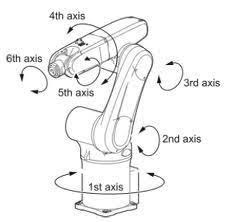
4-Axis Robot: A 4-axis robotic arm typically has four independent axes of motion. It can move horizontally, vertically, and rotate in a single plane. The fourth axis is usually a rotary joint that allows the arm to rotate or tilt.
6-Axis Robot: A 6-axis robotic arm is the most common and versatile type. It has six independent axes, providing a greater range of motion and flexibility. These axes allow the arm to move in various directions, including up/down, left/right, forward/backward, and rotate around multiple axes.
7-Axis Robot: Some robotic arms have seven axes, which offer an additional degree of freedom compared to 6-axis arms. The extra axis can provide increased flexibility and enable more complex movements or reach into confined spaces.
Delta Robot: Delta robots have a unique design and are typically used for high-speed, precise applications. They consist of three arms connected to a base, forming a triangular configuration. The arms are driven by individual actuators, and the end effector is typically mounted at the center of the triangle. Delta robots have three primary axes that control the movement of the end effector within the workspace.
It's important to note that the number of axes can vary depending on the specific robot model and design. Some advanced robotic arms may have more than seven axes, allowing for even greater range of motion and flexibility. The selection of the appropriate number of axes depends on the specific application requirements, workspace constraints, and desired tasks the robot needs to perform.
Arm length
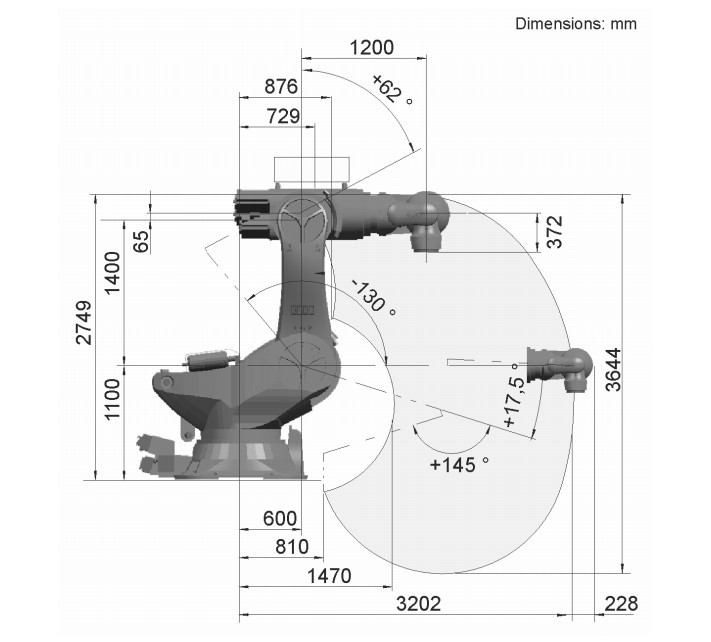
The arm length of a robotic arm refers to the distance from the base of the arm to the end effector (tool or gripper) when the arm is fully extended. It represents the reach or working envelope of the robotic arm, determining the maximum distance it can reach in all directions.
The integration of robotics with other technologies like AI, IoT, and cloud computing, along with increased focus on customization, flexibility, and collaboration, will shape the future of industrial robotic arms and their applications in the coming years.
Follow me to keep you up to date with the latest information on industrial robotic arms.
PRODUCTS


About us